Mitigating Risk Factors for International School Students
Mitigating Risk Factors for International School Students
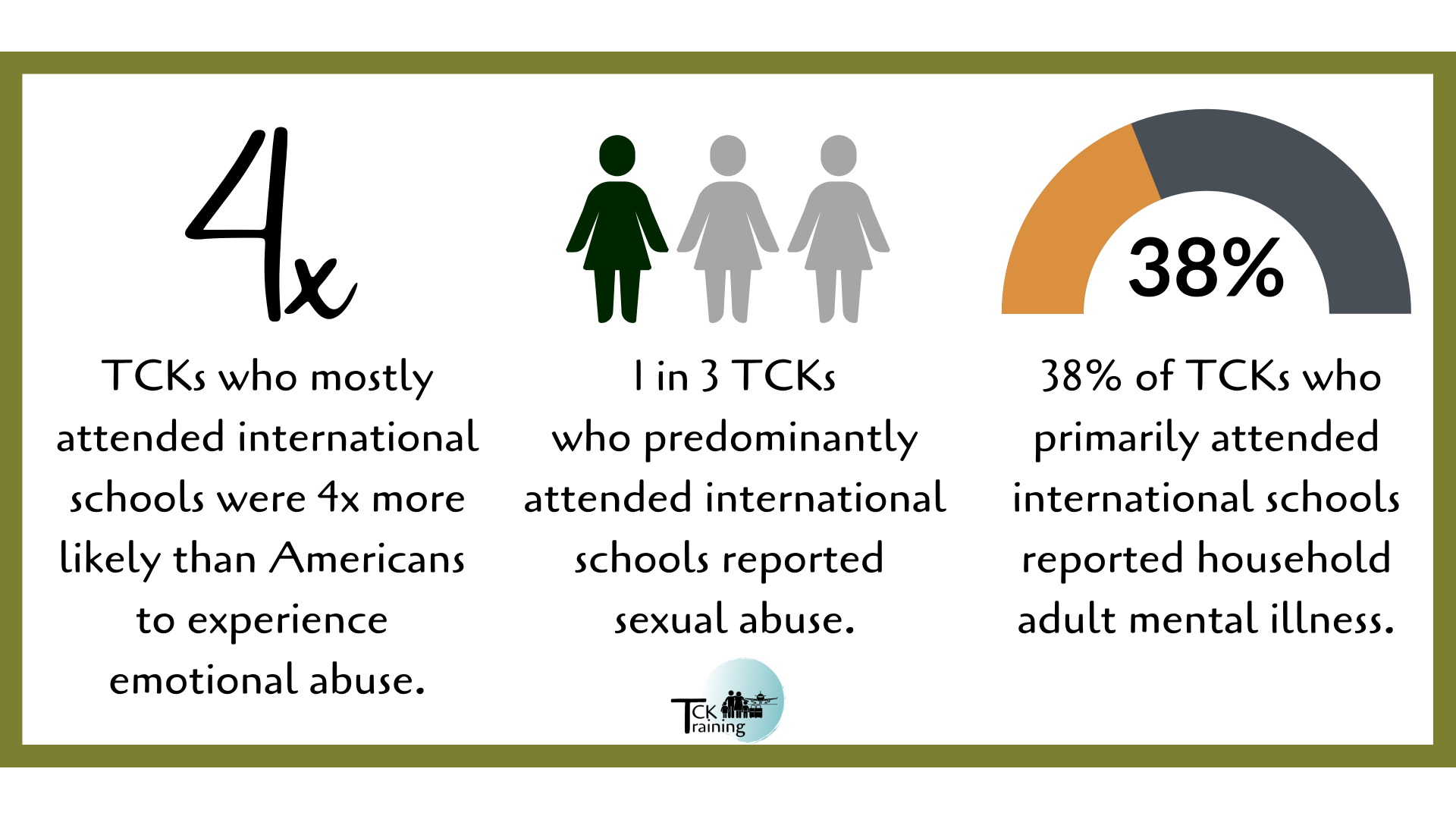
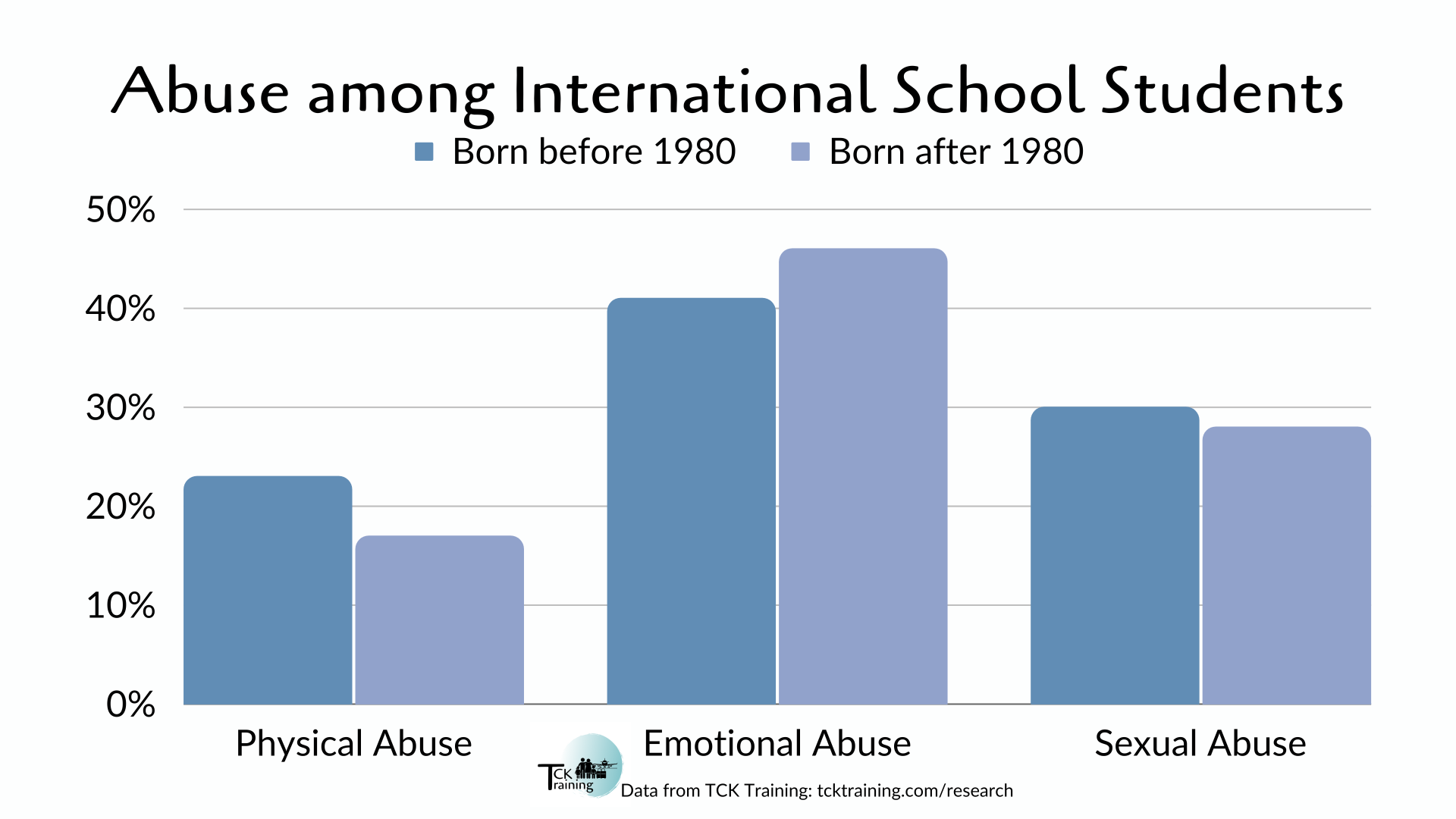
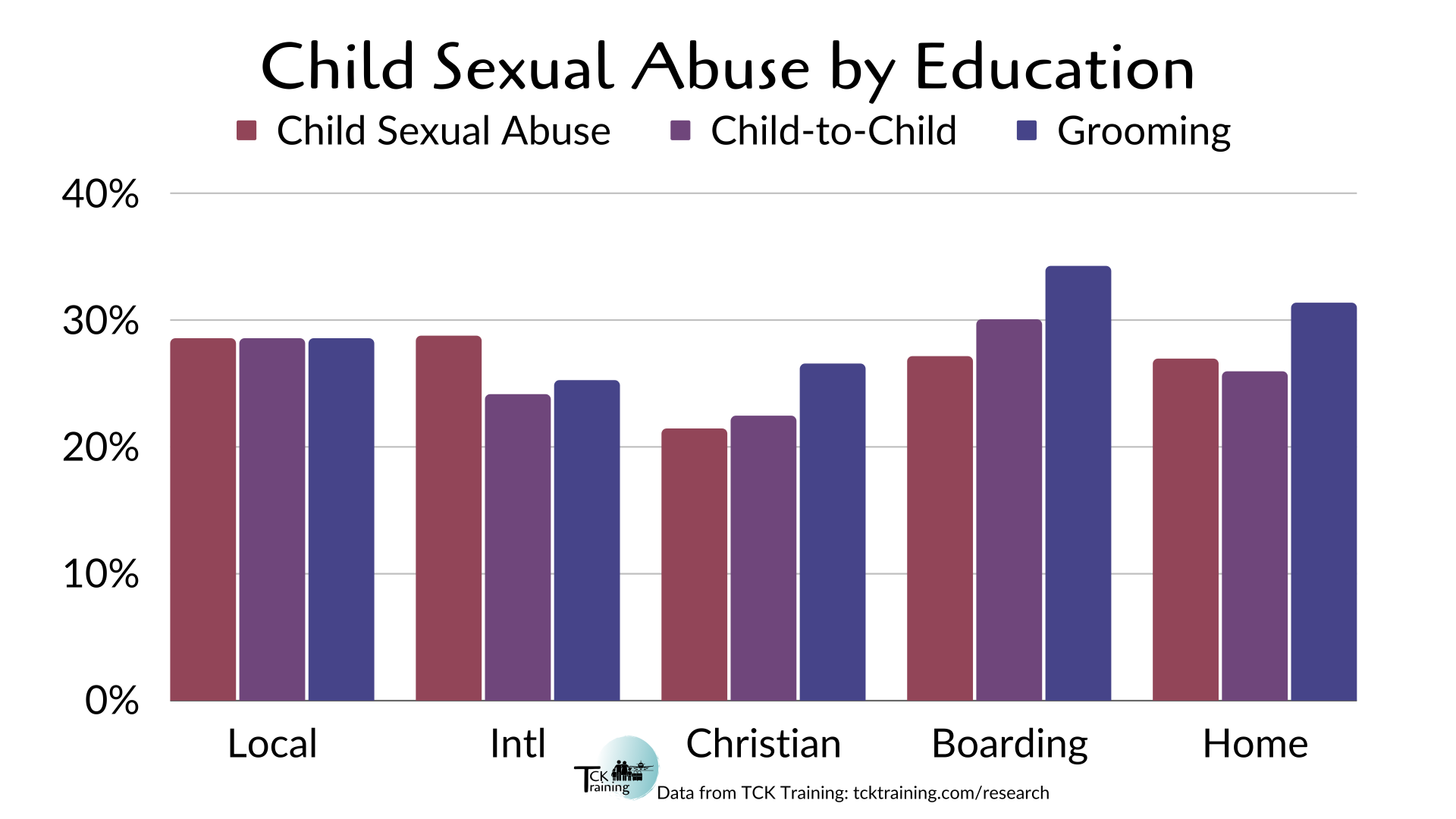
According to our research, TCKs who were predominantly educated in international schools were four times more likely than Americans to experience emotional abuse. Our survey also found that 1 out of every 3 international school TCKs experienced sexual abuse and 38% born after 1980 reported that an adult with mental illness lived in their childhood home.
Adverse Childhood Experiences (ACEs)
Research into ACEs has taken place worldwide across 25 years. The ten ACE factors are divided into Child Maltreatment (abuse and neglect directly suffered as a child) and Household Dysfunction (factors affecting the childhood living environment). The ACE questionnaire asks about childhood experiences without using the words "abuse" or "neglect" - helpful for catching abusive or neglectful experiences a person would not label that way themselves. We often compare our results to the CDC-Kaiser study of 17,000 Americans, as this is the largest ACE study done worldwide to date. Comparisons with other global populations can be found in our white paper.
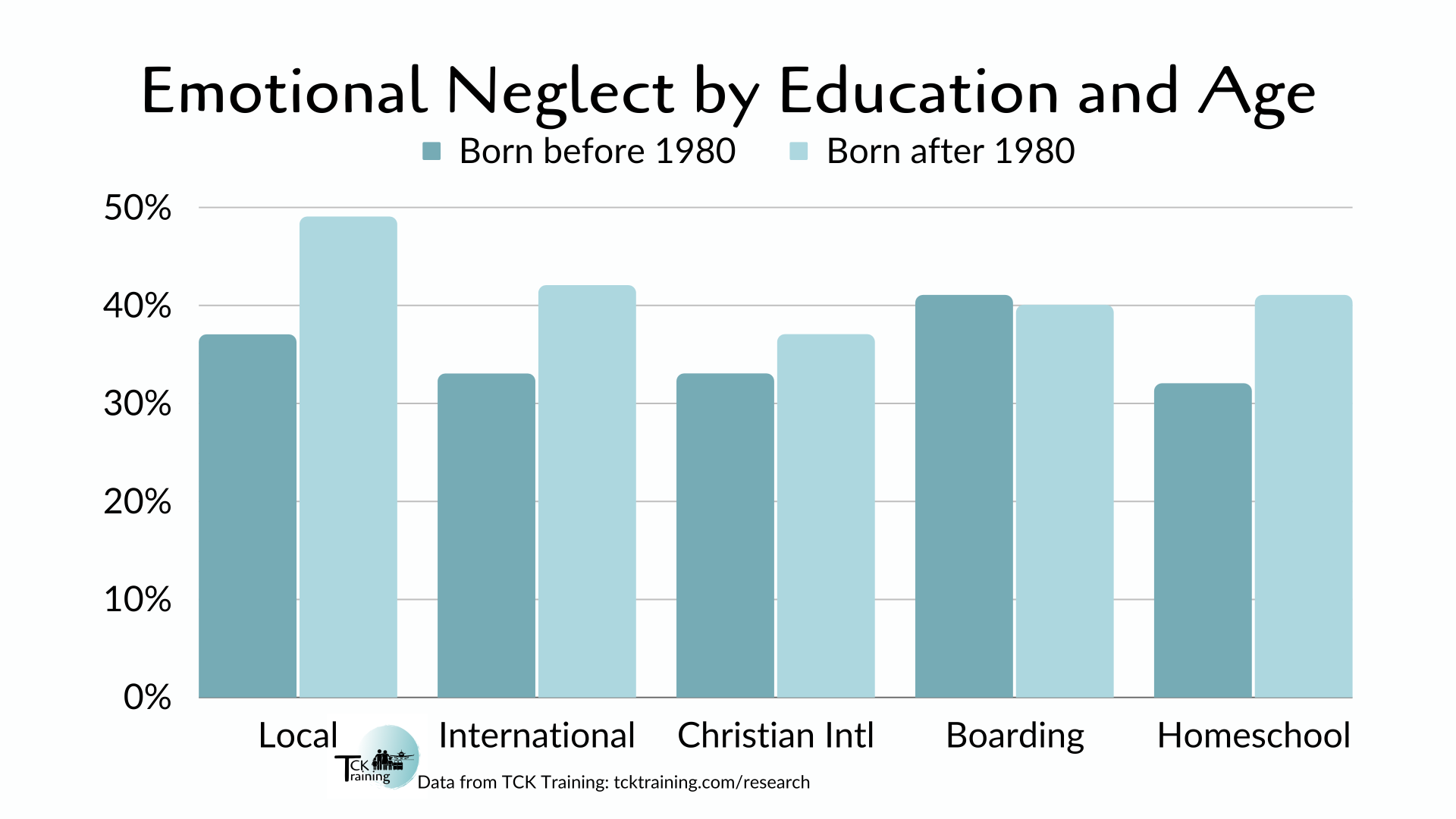
We often saw different results across categories among TCKs born before/after 1980 – with the Boomer/Gen X generations on one side, and the Millennial/Gen Z generations on the other. This also separates groups who were/were not impacted by the internet during childhood.
Abuse
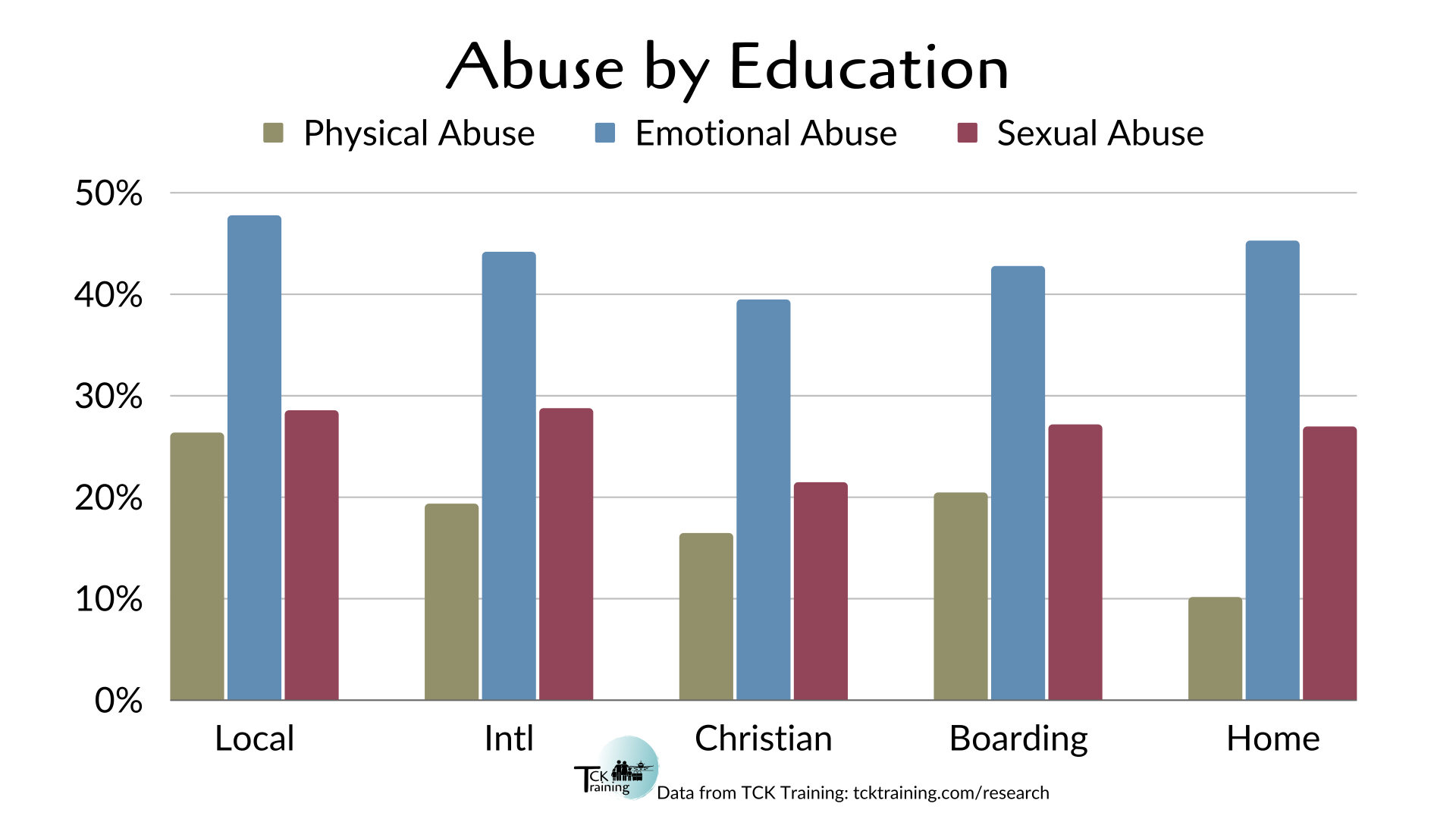
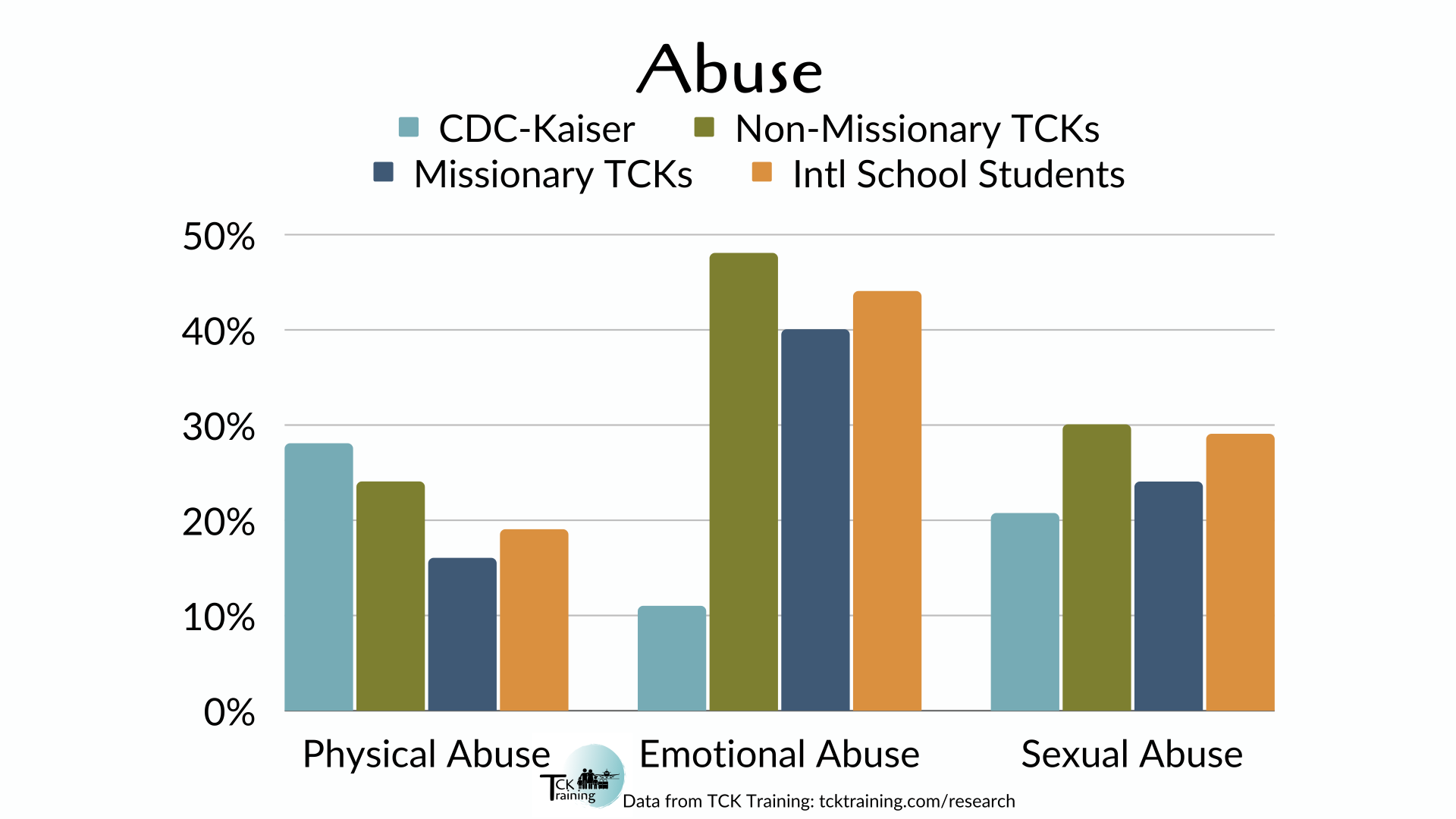
Abuse is broken down into three categories: physical, emotional, and sexual. (The ACE questionnaire records physical and emotional abuse that occurs within the home.) Nearly 1 in 5 TCKs who primarily attended international schools experienced physical abuse; nearly 1 in 3 reported sexual abuse.
44% of international school students experienced emotional abuse at home, four times the rate found among Americans; this was slightly lower than non-missionary TCKs overall, among whom the rate of emotional abuse was 48%. Fewer international school students experienced physical abuse than non-missionary TCKs over all: 24% vs 19% respectively. 29% of international school students reported sexual abuse, similar to 30% of non-missionary TCKs.
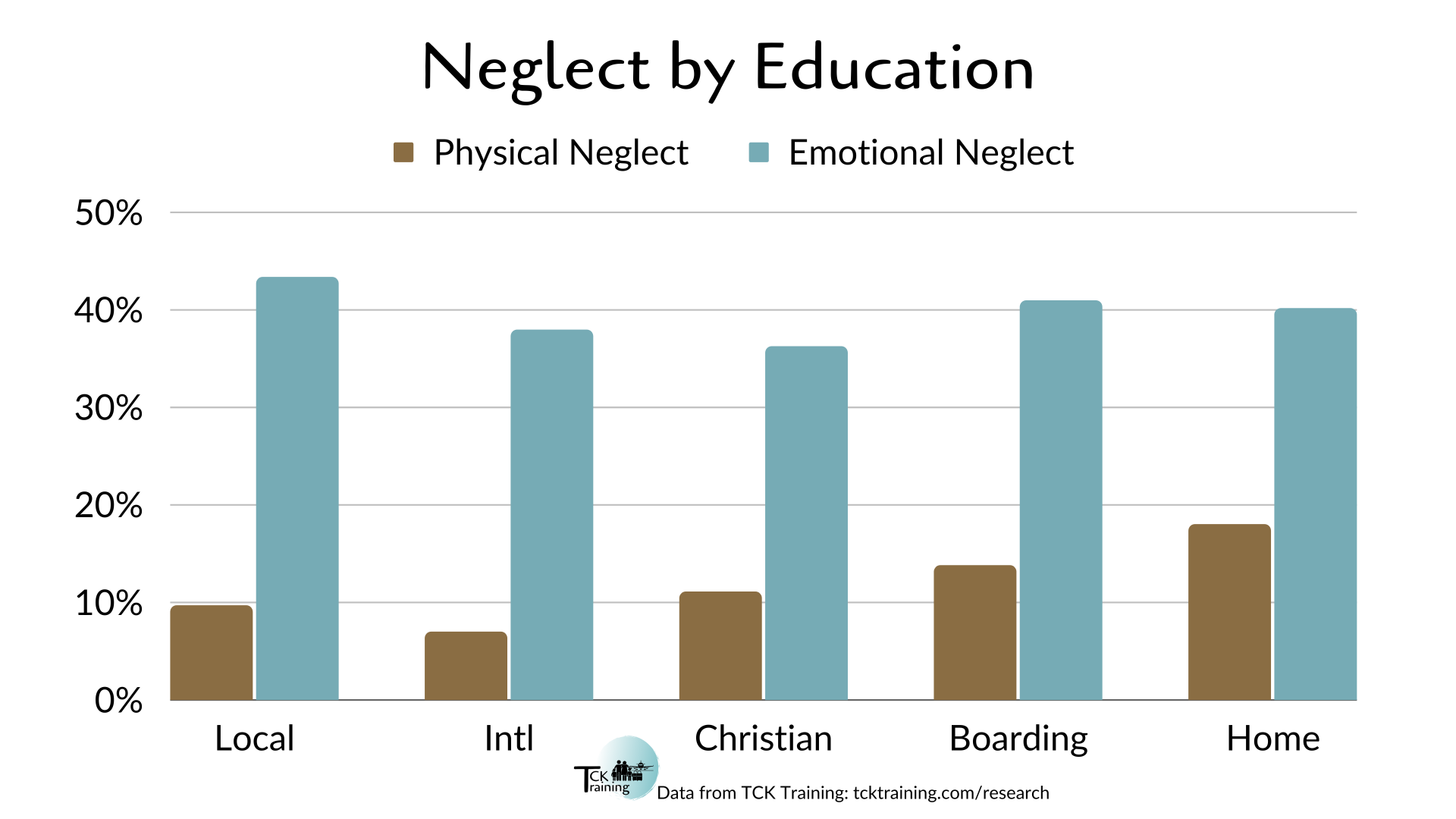
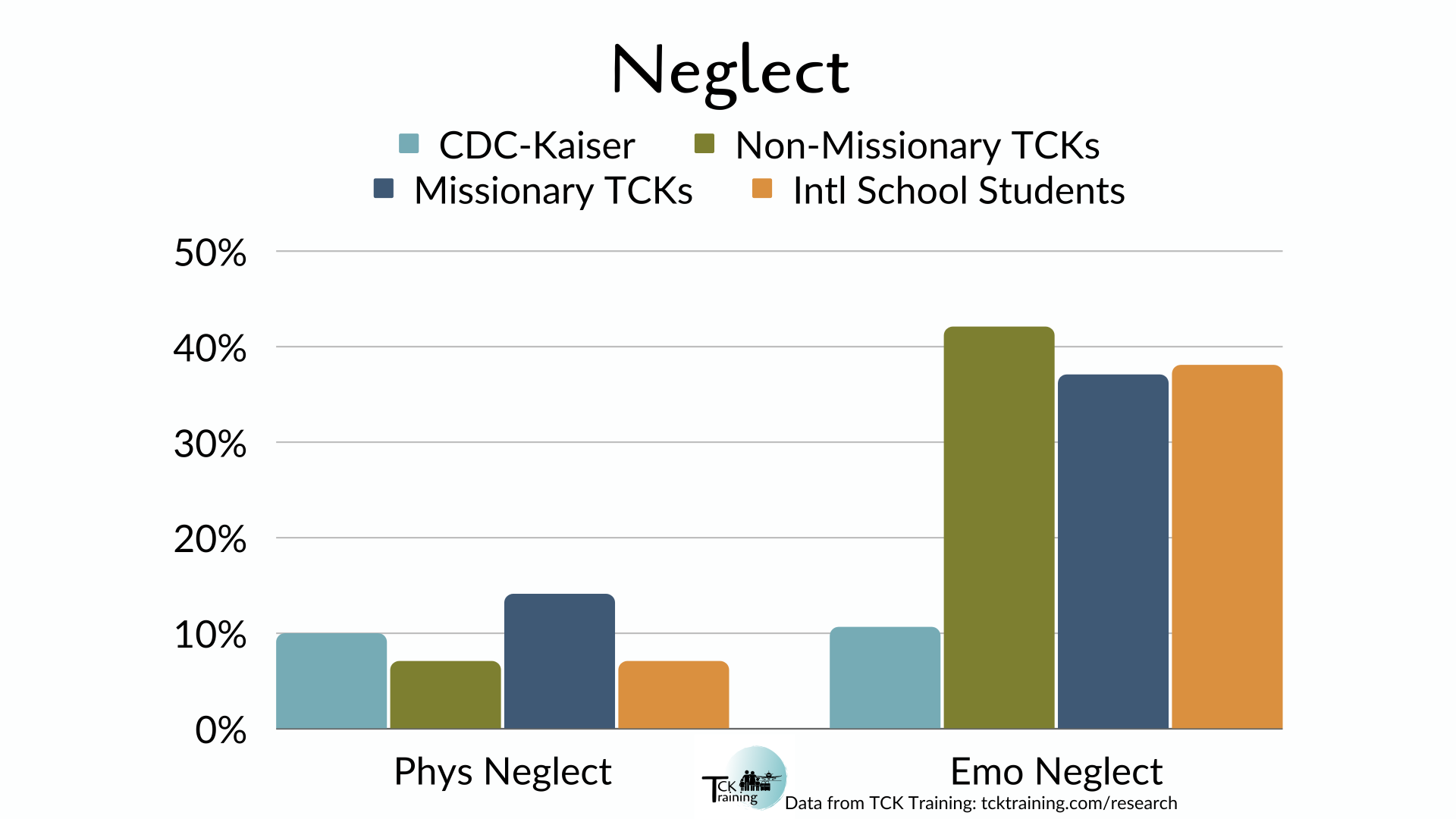
Neglect in the ACE questionnaire is defined through the lens of perception, where a child feels/worries their emotional/physical needs will not be met. While physical neglect is often seen as an extension of poverty, in the ACE context it is not just about what the child has access to but also about their security that provision will continue in the future. In the case of emotional neglect, a child feels unloved or unimportant – whether or not their parents actually do love them. In cases of physical neglect, a child feels their physical needs may not be met – even if they are always fed and cared for. This can look like worry that they will not have enough food, shelter, clean clothing, protection, or medical care. (11%).
Household dysfunction encompasses household adult mental illness, parental violence, parental divorce or separation, household adult incarceration, and household adult substance abuse. Incarceration was so low among TCKs that we have not included it in this summary.
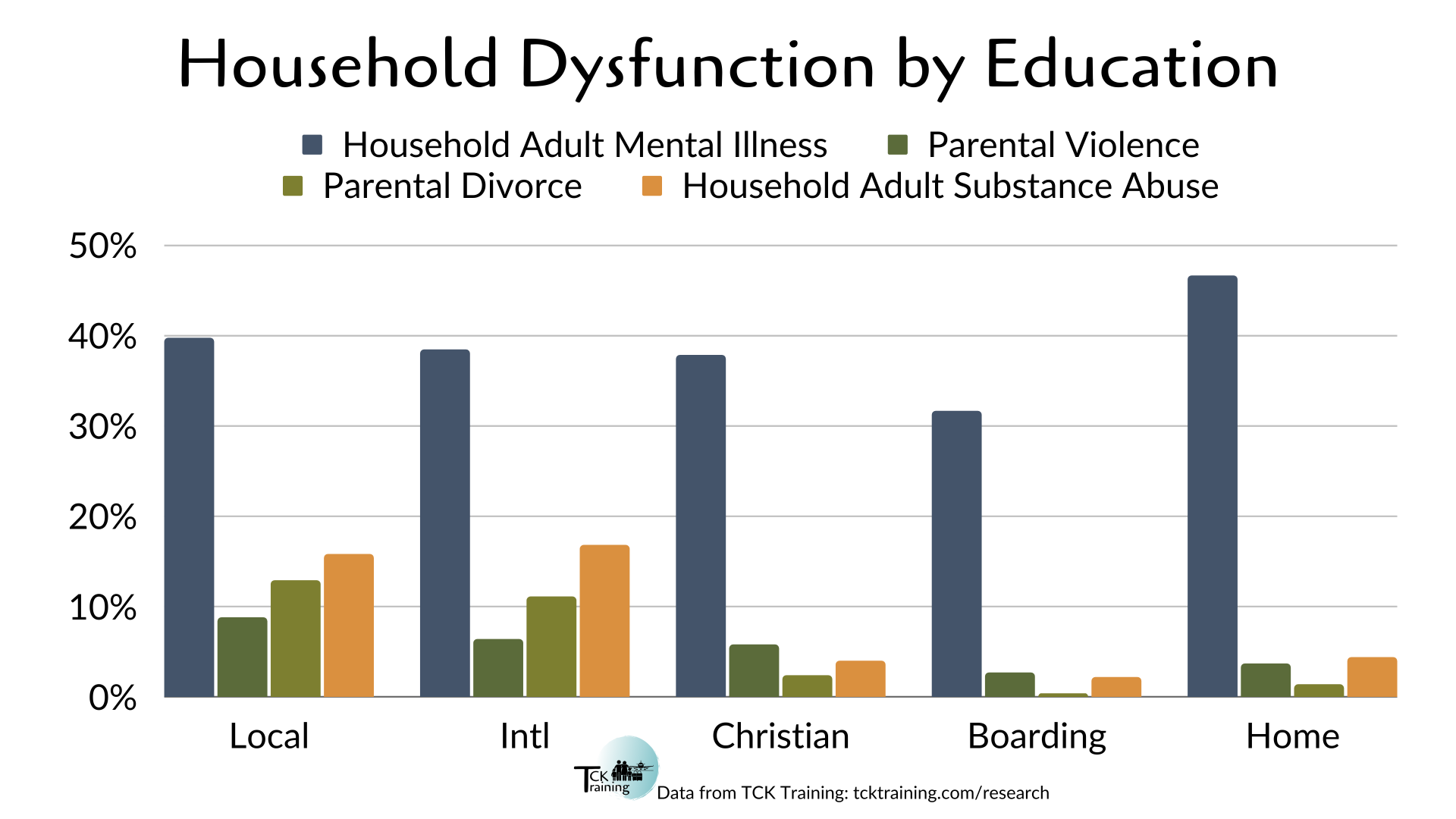
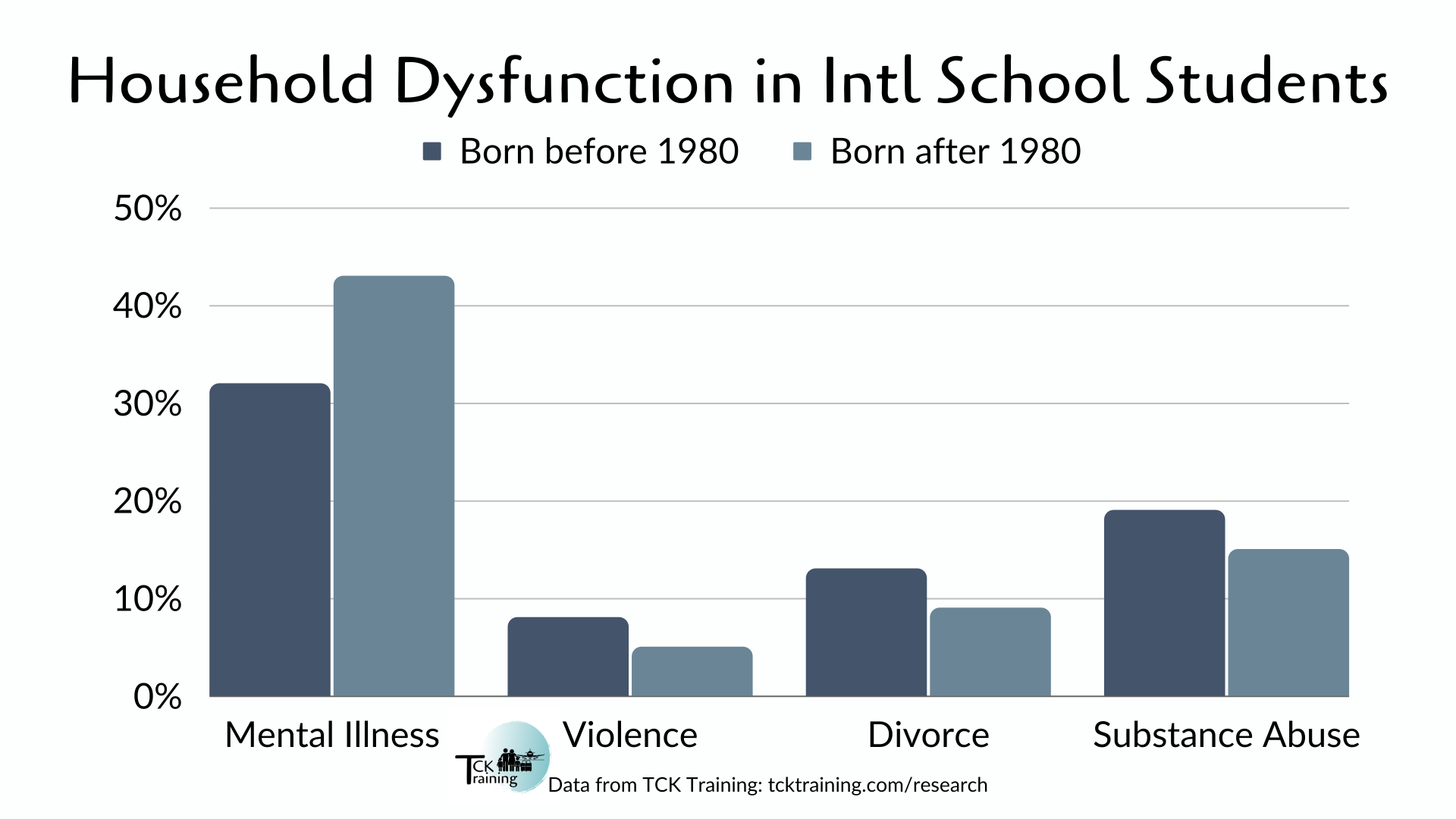
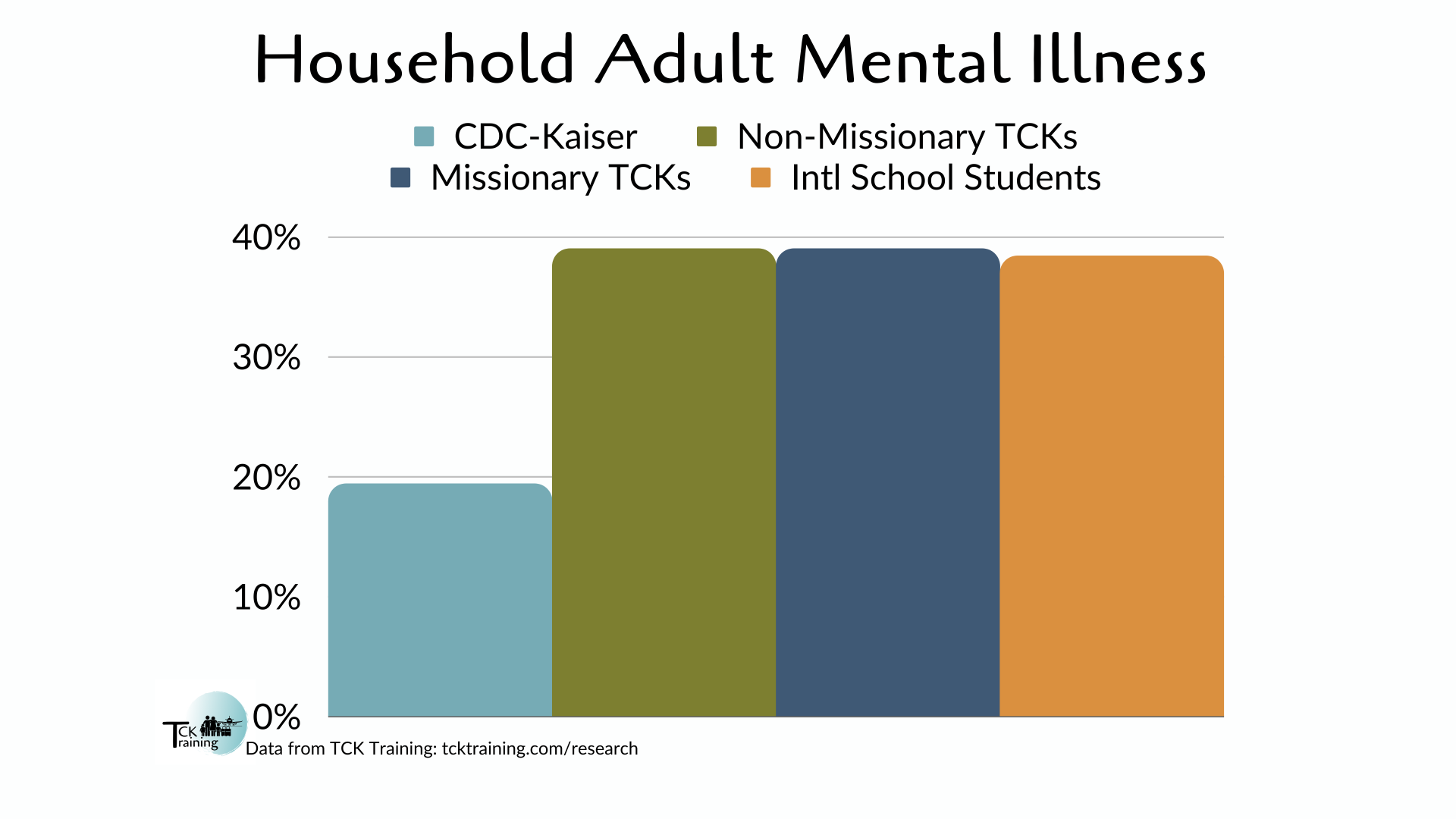
Household adult mental illness is an ACE assigned to anyone who had an adult living in their home during childhood who was depressed, mentally ill, or attempted suicide. 1 in 3 Boomers and Gen X international school students (33%) reported household adult mental illness, compared to 42% of Millennials and Gen Z. The overall rate of household adult mental illness among all TCKs (39%) is similar to that of international students overall (38%); this is twice the rate seen in Americans (19%). work, and they need support.
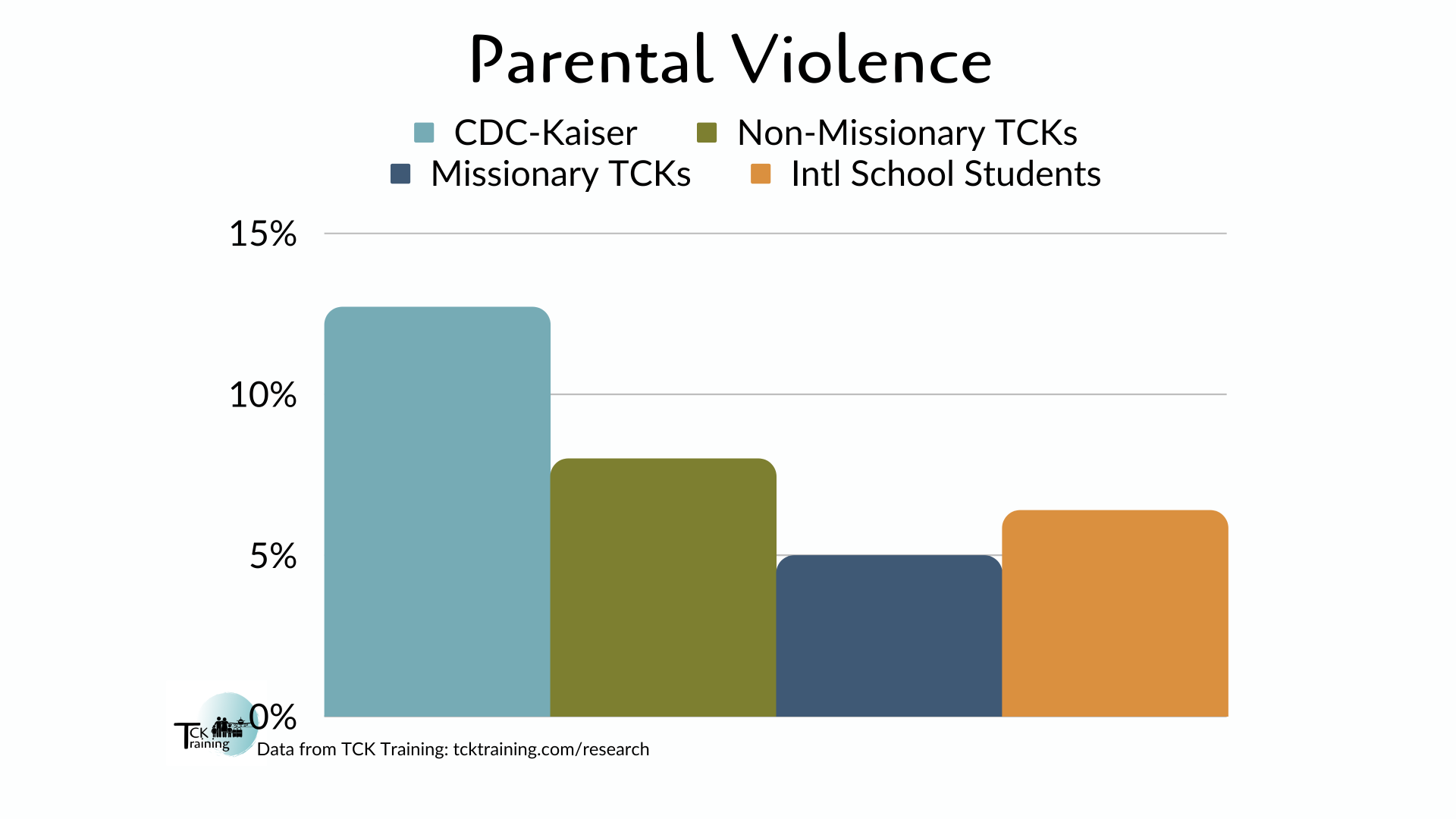
Parental violence is defined as a child being impacted by, even if not actually witnessing, violence toward a mother/step-mother or father/step-father. 6% of international school students reported parental violence. This rate decreased over time; 8% of older generations and 5% younger generations of international school students reported parental violence. International school students experienced parental violence at half of the rate found among Americans, and at a slightly lower rate than other non-missionary TCKs, 6% vs 8% respectively.
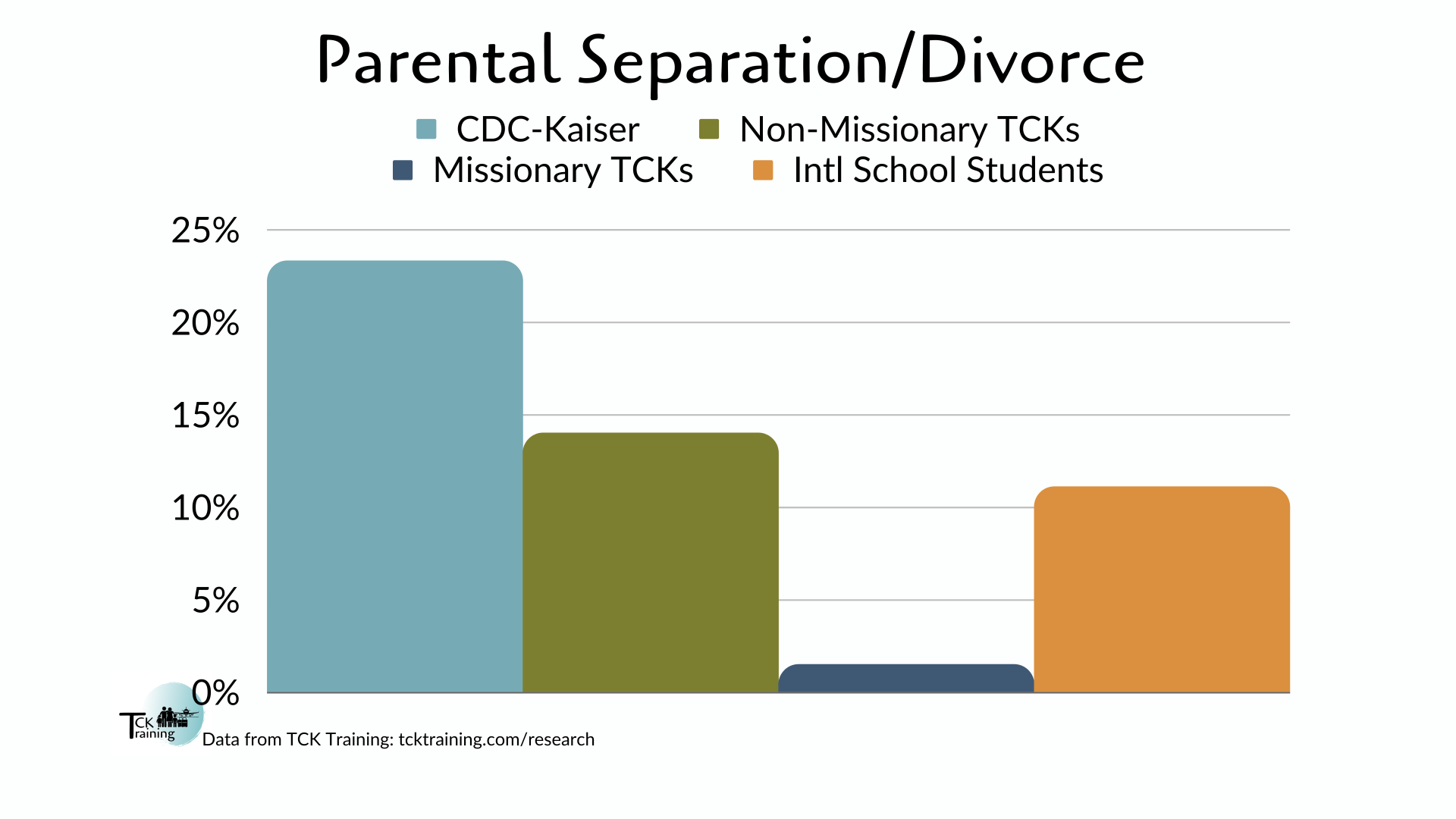
The rate of parental divorce/separation was 23% in the CDC-Kaiser study, but much lower among TCKs. 11% of international school students experienced parental divorce/separation before age 18, slightly lower than 14% of non-missionary TCKs overall. There was also a decrease in the divorce rate of international school families over time (13% vs. 9%). A lower divorce rate does not necessarily guarantee stronger marriages, unfortunately.
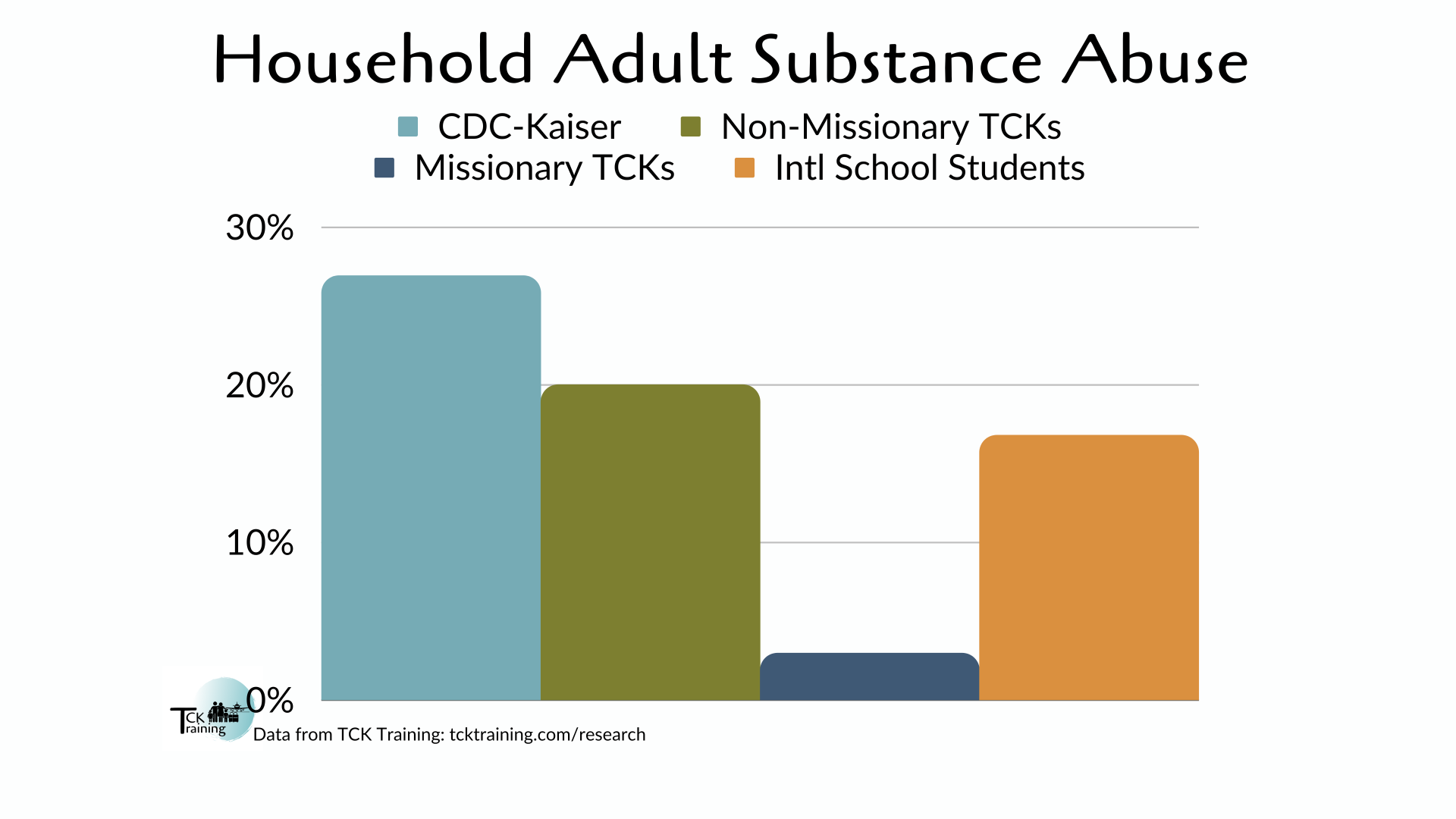
Substance abuse as an ACE factor required that an adult living in the home was an alcoholic or used illicit drugs. 17% of international school students reported household adult substance abuse, slightly less than the 20% of non-missionary TCKs overall. The rate decreased over time, from 19% to 15%. Substance abuse can be another sign of families under stress, in need of care and support.
Going by the lower rate seen in the younger generations of TCKs, an international classroom might include on average three students for whom alcoholism or substance abuse are happening at home.
While this data can seem discouraging, there is hope – and ways to mitigate the risks we’ve talked about. Globally mobile families need support in order to meet their children’s needs and ultimately thrive. These challenges and risks are not unsolvable or reasons to despair, but rather reasons to take action in intentional ways that reflect the urgency of the matter.
In TCKs at Risk we outline a number of ways that organizations can protect children and support families. For example, additional research into Positive Childhood Experiences (PCEs) gives a roadmap for effectively buffering children from difficulties they face.
References:
- Caution and Hope: The Prevalence of Adverse Childhood Experiences in Globally Mobile Third Culture Kids (Crossman and Wells, 2022. TCK Training.)
- TCKs at Risk: Risk Factors and Risk Mitigation for Globally Mobile Families (Crossman, Wells and Vahey Smith, 2022. TCK Training.)
- Caution and Hope for International School Students (Blog post, Crossman. TCK Training, 2022.)
- Hidden Struggles of International Students: Adversity Amid Privilege (Blog post, Crossman. Eleni Vardaki, 2022.)
- Data-driven interventions for Third Culture Kids (Kogelmann and Crossman, International School Leader Magazine, 2022).
- Third Culture Risk (Crossman, International Teachers Magazine, 2022).
For Caregivers of International School TCKs
Caregivers, as you read these statistics you may be feeling both motivation that there are needs you want to fill...and overwhelm not knowing how or where to start. You are not alone.
We've personally experienced how nerve wracking it can be to have the big and important role of caring for International School Kids ahead of you, but not feel equipped for it. Which is why we do what we do, we want you to experience the relief and confidence of being equipped and supported!
Get equipped with certifications and trainings
- Pathways Certification (for those in leadership and program development)
- Groundwork Certification (for those working on the ground with International School Kids)
For Parents of International School TCKs
Reading these statistics can be difficult. We know how much you love your TCKs and you want what's best for them. So please know there is hope!
We do this research because "when we know better we can do better" (Tanya Crossman) and we believe that together we can raise up a generation of healthy TCKs.
We design our resources to equip parents and caregivers to support TCKs according to the needs found in our research!
For Adult International School Kids
If you resonated with a lot of these statistics, we want you to know that you're not alone, and we don't want you to carry this alone!
Here's some resources we would recommend specifically for you:
- Unstacking Your Grief Tower (book)
- Unstacking Your Grief Tower (self-guided course)
- Unstacking Sessions (personalized coaching)
Recorded Workshops
...or get access to all three plus 20+ more with an ATCK membership
- Caution & Hope for International School Kids
- Red Zone/Green Zone: Understanding School Transition Stress
- What's it like being an international school student?
- Missionary Kids
- Military TCKs
- Diplomat Kids
- International Business Kids
- Children of International Educators & Humanitarian Workers
- Boarding School TCKs
- Local School TCKs
- Christian International School TCKs
- Homeschooled TCKs