Research Insights & White Papers

Research

We build on existing research into global mobility and TCK experiences, as well as general research in wellness, mental health, prevention science, resilience, and anything pointing to better outcomes. Our research focus is unique in that we combine fields - asking if and how what works in one country applies to the global TCK context.

Methodology

A statistical random sampling of all TCKs globally is a practical impossibility; our survey participants are self-selecting and therefore non-random. Each of our research projects has an Independent Review Team of professionals in fields such as academia, mental health, child protection, education, foreign service, and global mobility. This team reviews our questions and the level of care for survey participants, giving input we integrate before the survey is finalised. 

The History of Our Research
All White Papers and Research Summaries are available to download for free  
2021

Survey of Developmental Trauma in Third Culture Kids


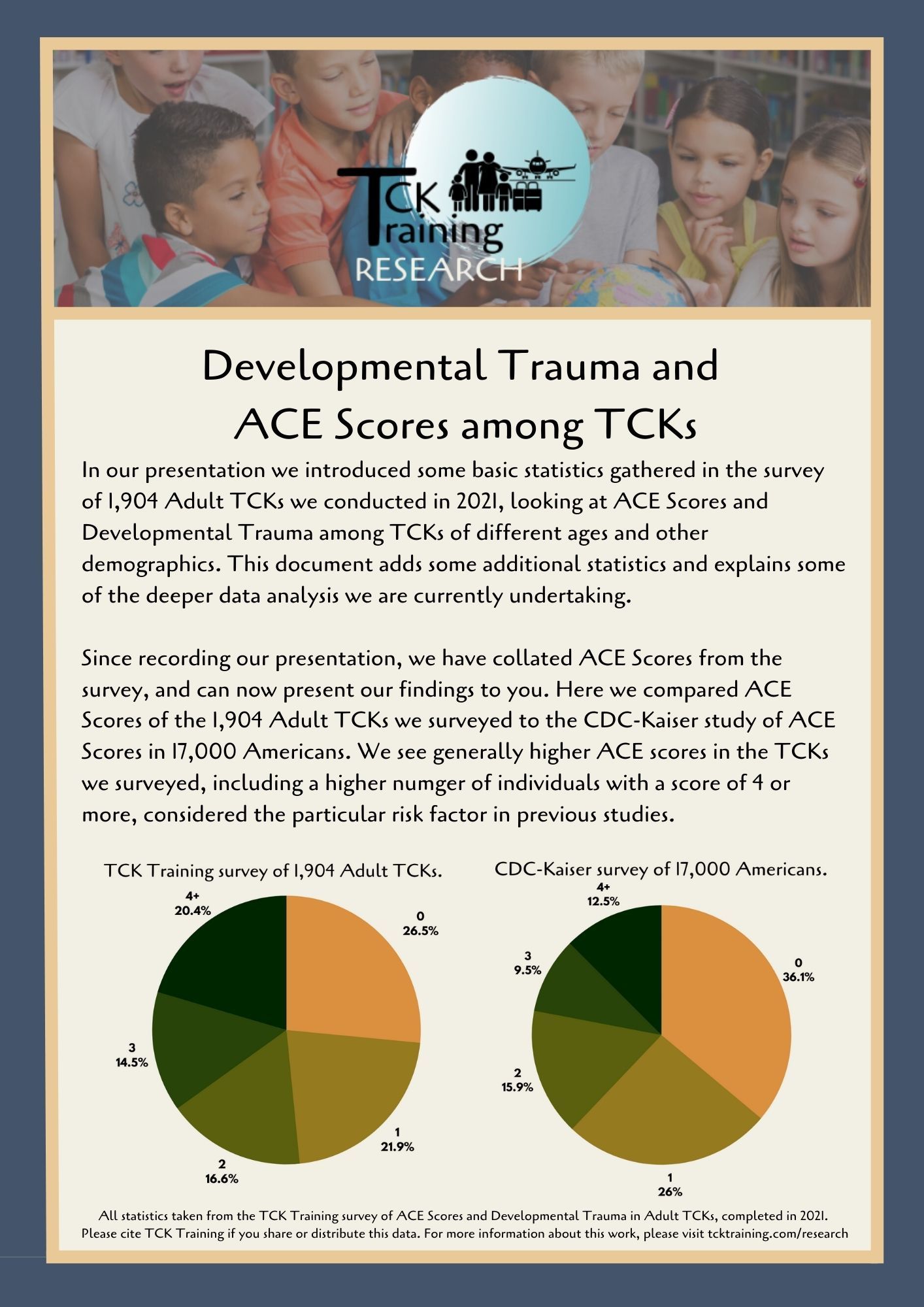
TCK Training ran a groundbreaking survey on Adverse Childhood Experiences (ACEs) and developmental trauma among Third Culture Kids (TCKs). Our primary objective was to get data on ACEs in TCKs; our secondary objective was to gain insights into other forms of childhood trauma experienced and witnessed by TCKs.
June 2022

White Paper #1:
Caution & Hope


In this white paper, we share data on demographics and ACE scores in 1,904 adult Third Culture Kids impacted by global mobility surveyed by TCK Training in our 2021 Survey of Developmental Trauma in TCKs.
Dec 2022

White Paper #2:
TCKs At Risk


Building upon our prior findings of elevated adversity among Third Culture Kids (TCKs) uncovered in our first white paper, this paper analyzes the specifics of their experiences across demographics and discusses ways to improve outcomes for this population.
Oct 2023

White Paper #3:
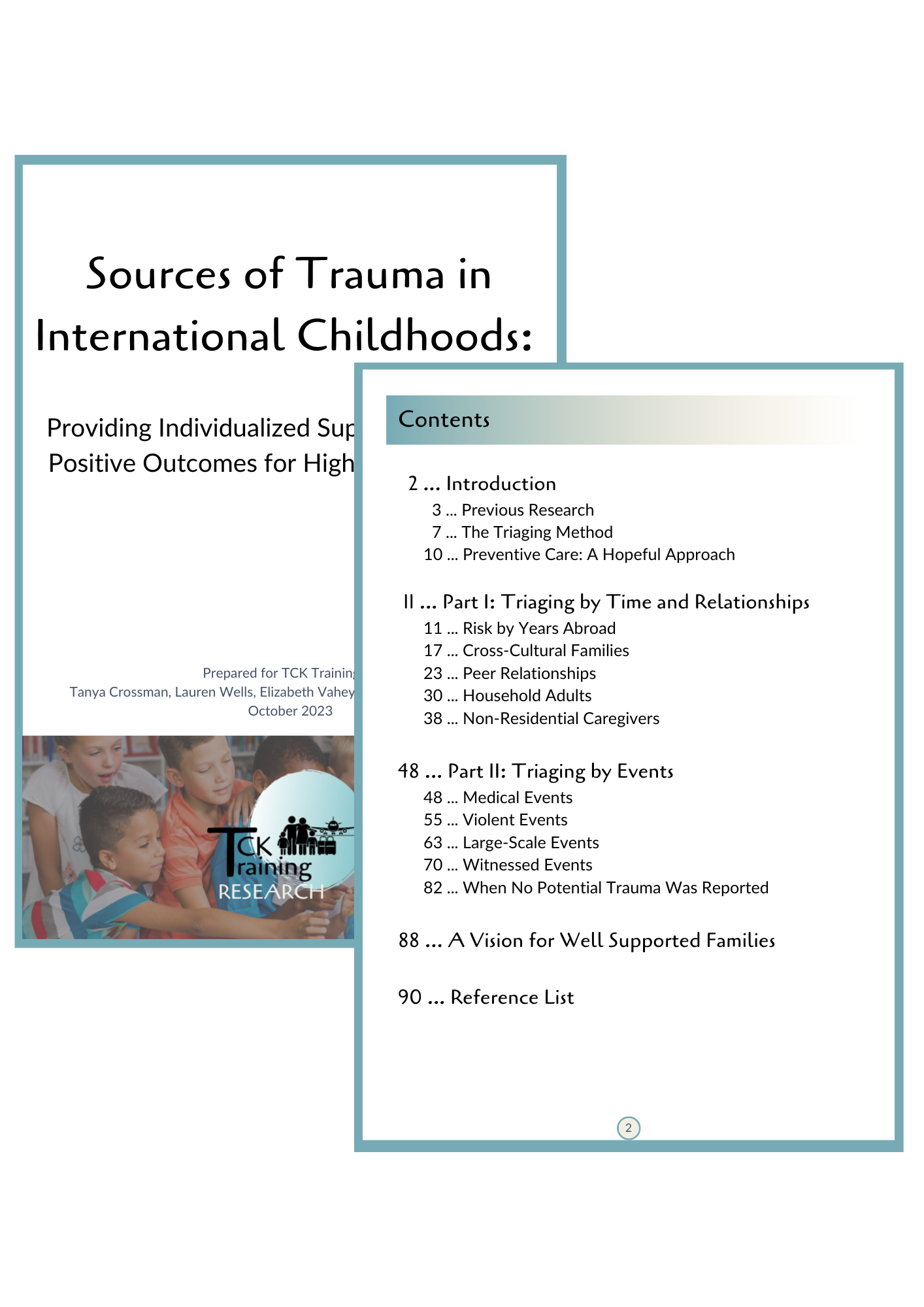
Sources of Trauma in International Childhoods


This white paper compiles ten concise papers, each exploring a potential source of risk or trauma, comparing existing research in non-TCK populations with data from 1,904 surveyed TCKs to assess its impact on ACE scores and specific factors. Additionally, for each section we explore what effective family support can look like when this factor is present.
sources of trauma table of contents
2024

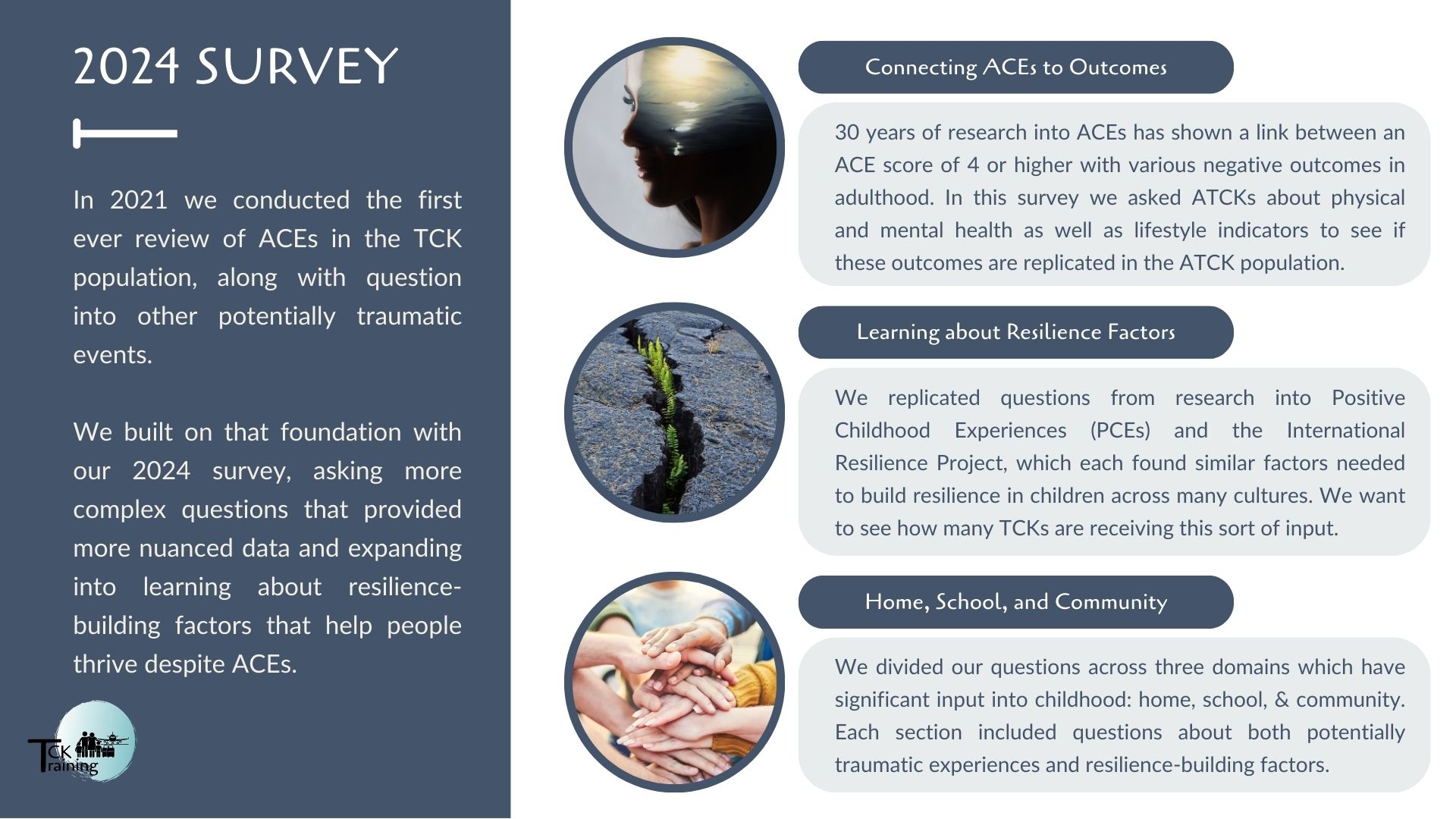
Survey of Impact of Childhood Global Mobility on Adult Wellness


In this 2024 survey, we are examining both Adverse Childhood Experiences and Positive Childhood Experiences, as well as adult experiences. We are looking for connections between childhood experiences and adult wellness benchmarks in the globally mobile population, to compare with similar research that has been done in single-country populations.
Jan 2025

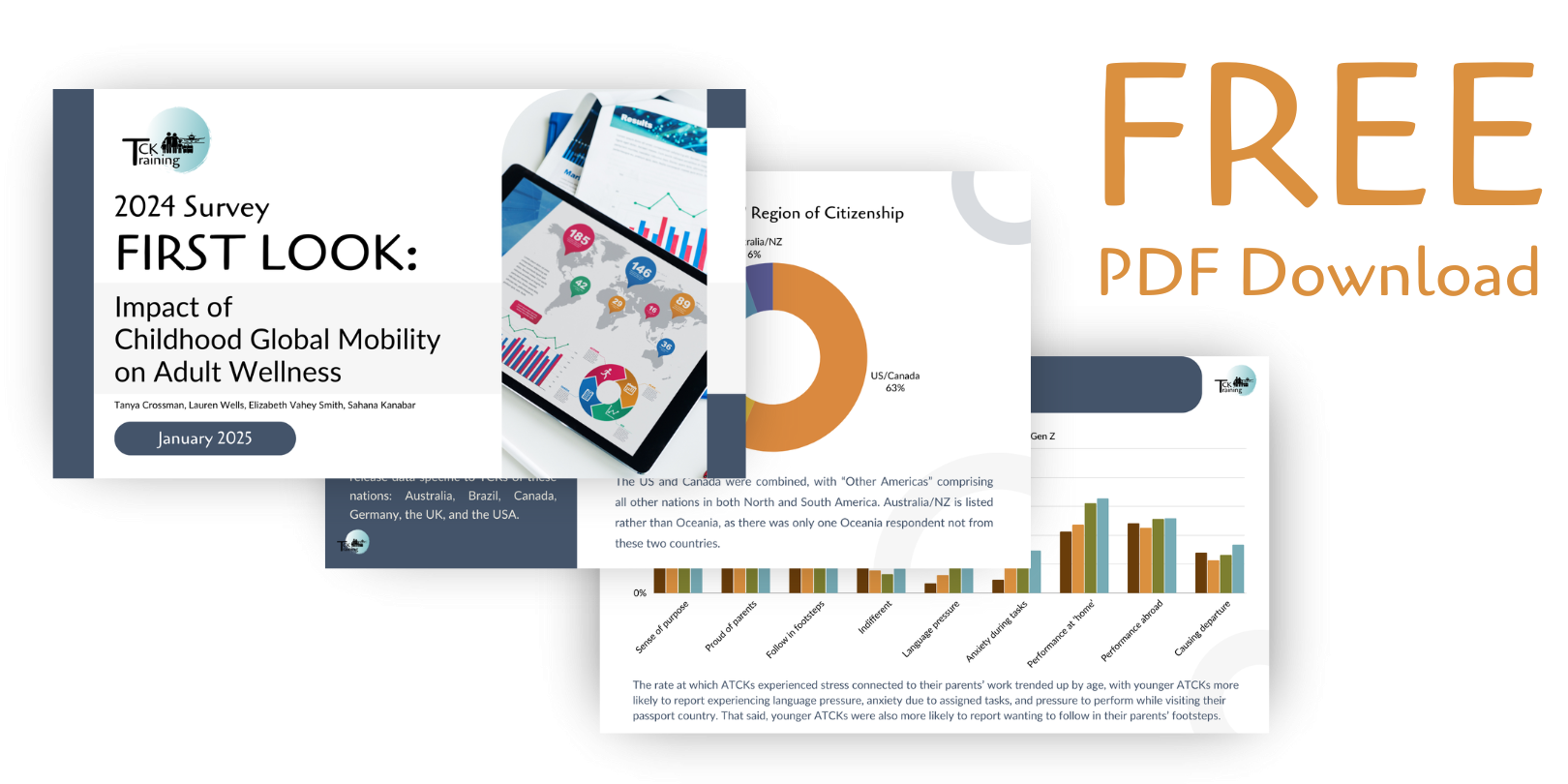
Preliminary Findings:
First Look at the Data from the 2024 Survey on the Impact of Childhood Global Mobility on Adult Wellness


Hear from 1,643 Adult TCKs from a range of backgrounds. Learn about their strengths, struggles, and opinions on what it was like to grow up as a TCK. A variety of information of TCKs' mental health is also included.
Data graphic
Sept 2025

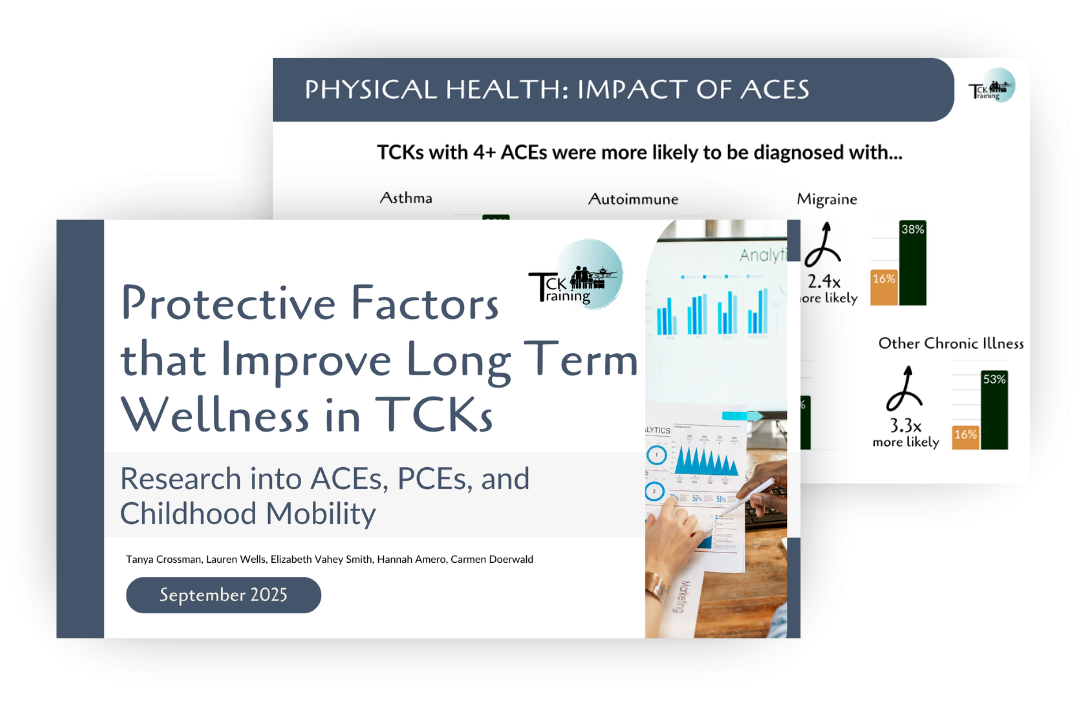
Protective Factors that Improve Long-Term Wellness for TCKs:
Research into ACEs, PCEs, and Childhood Mobility


This research report explores connections between childhood experiences and adult wellness benchmarks which demonstrate that preventive care works! PCEs were associated with better long term outcomes for TCKs in their mental health, physical health, lifestyle choices, and opinions about life abroad.
Feb 2026

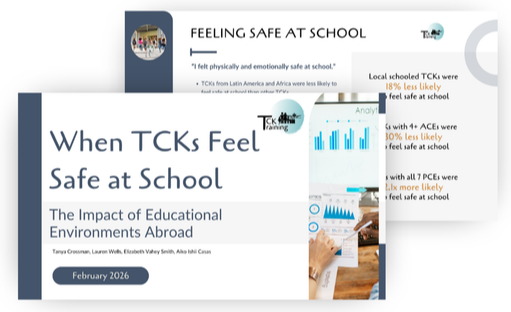
When TCKs Feel Safe at School:
The Impact of Educational Environments Abroad


A significant 'missing link' in our 2021 survey was learning about the impact of school environments on TCKs. In our 2024 survey we looked at this more closely. We were pleased to find most TCKs considered school a safe space, with adults who met their emotional needs. 
Aug 2026

TCKs & the Wider Community:
How Community Can Mitigate the Risks of Living Abroad for Expat Kids


New data on experiences that impact expat kids' sense of safety while living abroad, including both resilience factors provided in community, and potential adversity - such as street harassment and microaggresions - as well as the impact of additional adults living in the home.